Looking for the best shade-grown coffee beans? You can’t go wrong with options like Amazon Fresh Just Bright Whole Bean Coffee and Lifeboost Organic Espresso.
Don Memo’s Honduras Single-Origin Dark Roast offers rich flavors, while Tiny Footprint Coffee supports reforestation efforts.
Be sure to check out Kicking Horse Coffee and Tomorrow’s Coffee for more delicious choices.
When selecting your beans, consider flavor profiles, price, and certifications.
Stay tuned to explore even more top picks that promise a sustainable brew you’ll absolutely love!
Amazon Fresh, Just Bright Whole Bean Coffee Light Roast, 32 Oz

If you’re a fan of light, invigorating coffee that doesn’t compromise on flavor, the Amazon Fresh Just Bright Whole Bean Coffee Light Roast is an excellent choice. This 32-ounce bag features 100% Arabica beans sourced from Central and South America, roasted right in the U.S.A. You’ll love its crisp, clean flavor with nutty caramel notes, perfect for a smooth finish. Grinding the beans yourself allows for customization, ensuring you get the strength you crave. Customers rave about its addictive quality and consistent flavor, making it a fantastic option for those who appreciate a mild yet satisfying cup of coffee.
Best For: Coffee enthusiasts who enjoy a mild and flavorful light roast with the ability to customize their brew.
Pros:
- Smooth flavor profile with nutty caramel notes that appeal to light roast lovers.
- Customizable grind size allows for personalized brewing strength and freshness.
- Positive customer feedback highlights consistent quality and an addictive taste.
Cons:
- Some users report a slight green bean taste, which may not appeal to everyone.
- Preference varies, as some may still favor darker roasts over this light blend.
- Limited availability compared to more established brands, which could affect accessibility.
Lifeboost Organic Espresso Ground Coffee (12oz Bag)

Lifeboost Organic Espresso Ground Coffee is the ultimate choice for coffee enthusiasts who appreciate a low-acid option without sacrificing flavor. Sourced from high-elevation farms in Nicaragua, these beans are hand-selected for purity and cultivated in bird-friendly environments. Enjoy a rich, smooth taste free from the bitterness often associated with other coffees. Plus, it’s USDA certified organic, non-GMO, and rigorously tested for toxins, ensuring your health is a top priority. Customers frequently commend the energy boost and stomach comfort this coffee provides. With a satisfaction guarantee, you can try it for 30 days, risk-free. Indulge in the boldness you deserve!
Best For: Coffee lovers seeking a low-acid espresso that delivers a rich flavor without bitterness.
Pros:
- USDA certified organic and non-GMO, ensuring high-quality ingredients.
- Hand-selected beans from bird-friendly farms, promoting environmental sustainability.
- Positive customer feedback on energy boost and stomach comfort.
Cons:
- Higher price point compared to conventional coffee options.
- Limited availability may make it more difficult to find in certain areas.
- Taste preference can vary; not every coffee drinker may appreciate the low-acid profile.
Lifeboost Light Roast Coffee Beans – Non-GMO Organic Whole Bean Coffee (12 Ounces)
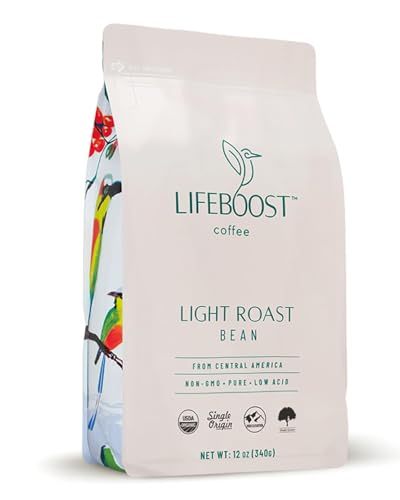
For coffee enthusiasts in search of a smooth and gentle brew, Lifeboost Light Roast Coffee Beans shine with their low acidity and rich flavor profile. These non-GMO, organic beans are sourced from high-elevation farms in Nicaragua and are meticulously hand-selected to ensure purity. You’ll love their health benefits, including being easy on the stomach and rich in antioxidants. Many customers praise the fresh, rich taste that is free from bitterness, making it a perfect choice for those with digestive sensitivities. Additionally, Lifeboost’s dedication to ethical sourcing and attentive customer service ensures a satisfying coffee experience. However, some users have expressed concerns regarding quality and noted a higher price point.
Best For: Coffee lovers who desire a smooth, low-acid brew that is gentle on the stomach and ethically sourced.
Pros:
- Antioxidant-rich and low acidity supports digestive health.
- Fresh, rich flavor without bitterness, making it suitable for sensitive stomachs.
- Strong commitment to ethical sourcing and responsive customer service enhances customer satisfaction.
Cons:
- Some customers have reported quality issues, such as stale coffee.
- The higher price point compared to other brands may deter certain buyers.
- Mixed reviews on taste, with some finding it too light for their preference.
Don Memo Honduras Single-Origin Dark Roast Coffee Beans (Whole Bean, 12 oz)

Don Memo Honduras Single-Origin Dark Roast Coffee Beans are a fantastic choice for coffee lovers seeking a smooth, low-acid brew with a rich flavor profile. Grown at an altitude of 1,300 meters under shade trees, these 100% Honduran Arabica beans feature delightful notes of caramel, sweet citrus, nutty undertones, and chocolate flavors, achieving an impressive Cup-of-Excellence score of 84. Family-harvested and sustainably farmed, these beans support local communities. Freshly roasted in small batches, they can be brewed using various methods, from pour-over to cold brew, ensuring a delightful cup every time. Just be mindful of freshness upon arrival to avoid any staleness.
Best For: Coffee enthusiasts who appreciate a smooth, low-acid brew with a rich flavor profile and support sustainable farming practices.
Pros:
- Fresh small-batch roasting guarantees a delightful flavor experience.
- Versatile brewing options, perfect for pour-over, drip, French press, or cold brew.
- Sustainably farmed and family-harvested, contributing to local Honduran communities.
Cons:
- Some customers report beans arriving stale, which can affect freshness.
- The roast date is not clearly indicated, potentially raising quality concerns for some consumers.
- The flavor profile may not satisfy those looking for fruity or third-wave coffee experiences.
Tiny Footprint Coffee – Fair Trade Organic Nicaragua Segovia Dark Roast (16 Ounce)

If you’re searching for a coffee that not only tantalizes your taste buds but also champions sustainability, Tiny Footprint Coffee’s Fair Trade Organic Nicaragua Segovia Dark Roast is an outstanding option. This USDA Organic, carbon-negative coffee features robust flavors of chocolate, apricot, and spice, making it ideal for any brewing method. Sourced from family-owned farms, every pound sold contributes to reforestation efforts in Ecuador’s Mindo Cloud Forest, aiding in CO2 reduction and habitat restoration. Customers rave about its smooth, rich taste, although some have pointed out occasional inconsistencies between batches. In summary, it’s a superb choice for eco-conscious coffee enthusiasts who prioritize quality and sustainability.
Best For: Eco-conscious coffee enthusiasts who value premium, sustainable products and enjoy robust flavors.
Pros:
- USDA Organic and Fair Trade Certified, guaranteeing ethical sourcing and agricultural practices.
- Carbon negative initiative promotes reforestation, actively fighting climate change.
- Rich flavor profile featuring notes of chocolate, apricot, and spice, perfect for various brewing techniques.
Cons:
- Some customers have noted variations in taste among different batches.
- The higher price point may not be ideal for budget-minded consumers.
- Limited availability in certain regions, which can make regular purchases challenging.
Tomorrows Coffee Organic Dark French Roast (1 lb., whole bean)

Tomorrow's Coffee Organic, Smithsonian Bird Friendly Certified, Fair Trade, Shade Grown Coffee, Dark French Roast with chocolate flavor | Sustains Amazon Rainforest, Compostable Bag, Eco-Friendly Packaging (1 lb., whole bean)
Tomorrows Coffee Organic Dark French Roast (1 lb., whole bean) is the ideal selection for coffee enthusiasts who seek a rich, full-bodied experience while also valuing ethical sourcing. This dark roast boasts a delightful chocolate flavor, paired with an ashy aroma and hints of burnt marshmallow. Packaged in a compostable bag, it’s both eco-friendly and contributes to the preservation of the Amazon Rainforest. While some reviewers have mentioned a metallic aftertaste, many appreciate its low acidity and robust strength, making it excellent for espresso. With Fair Trade and Smithsonian Bird Friendly certifications, you can indulge in your coffee knowing you’re supporting sustainable practices.
Best For: Those who love a rich, dark coffee with a commitment to ethical sourcing and environmental benefits.
Pros:
- Organic, Fair Trade, and Smithsonian Bird Friendly certified, ensuring responsible sourcing.
- Full-bodied flavor with delightful chocolate notes, perfect for espresso and cappuccino.
- Eco-friendly packaging that aids in rainforest preservation.
Cons:
- Some customers have reported a metallic aftertaste and differing taste preferences.
- A few reviews highlight issues with packaging, such as damaged bags upon arrival.
- The higher price point may not align with everyone’s taste expectations.
Kicking Horse Coffee, Three Sisters Medium Roast Whole Bean (2.2 Pound)
Product not found or API error.
For coffee lovers who appreciate a smooth, well-rounded brew, Kicking Horse Coffee‘s Three Sisters Medium Roast Whole Bean (2.2 Pound) stands out as an exceptional choice. This certified organic, Fairtrade coffee features 100% Arabica beans grown at higher elevations, ensuring quality and flavor. You’ll enjoy tasting notes of stone fruit and cocoa, complemented by a sweet aroma of dried fruit and toasted coconut. Roasted in the Rocky Mountains, it’s perfect for various brewing methods, maintaining a consistently delicious flavor. Customers rave about its smoothness and low acidity, making it a standout option for your daily coffee ritual.
Best For: Coffee enthusiasts seeking a smooth, low-acidity brew that offers a well-rounded flavor profile.
Pros:
- Certified organic and Fairtrade, supporting sustainable and ethical farming practices.
- Versatile brewing options, suitable for French Press, Drip, Pour Over, and Cold Brew methods.
- Noted for its pleasant tasting notes of stone fruit and cocoa, with a sweet aroma.
Cons:
- Some customers find the flavor lacking in strength or intensity.
- May not appeal to those who prefer a bolder, more robust coffee experience.
- Limited availability compared to larger commercial brands may be a drawback for some.
Factors to Consider When Choosing Shade Grown Coffee Beans
When selecting shade-grown coffee beans, several important factors should be taken into account. First, consider the sourcing and origin of the beans, as well as the flavor profile that best matches your palate. Additionally, it’s crucial to evaluate the environmental impact and the certification standards associated with the coffee. Lastly, think about your preferred roast level to ensure a satisfying brew.
Sourcing and Origin
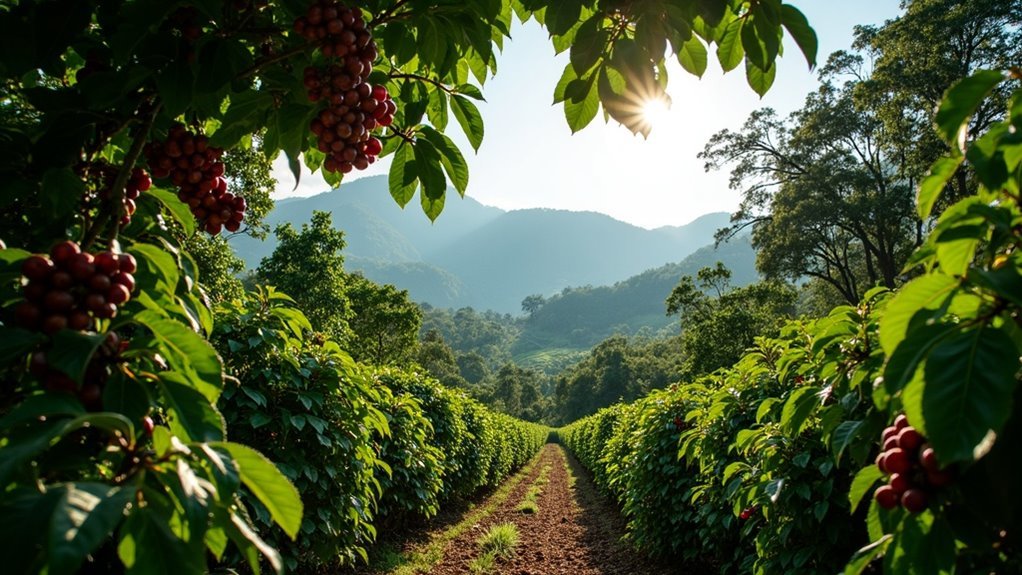
Choosing shade-grown coffee beans involves several important factors, especially when it comes to sourcing and origin. Look for coffee cultivated under a canopy of trees, as this promotes biodiversity and provides habitats for wildlife, particularly birds. Beans from high-elevation regions often develop unique flavor profiles, thanks to cooler temperatures. Since shade-grown coffee is typically hand-selected, you can expect higher quality and purity, as this sustainable harvesting method guarantees that only the best beans make it to your cup. Additionally, shade-grown coffee tends to be lower in acidity, making it gentler on your stomach. Many of these farms also embrace organic practices, reducing chemical pesticide use and fostering a healthier ecosystem, making your coffee choice even more impactful.
Flavor Profile Characteristics
Have you ever wondered how the growing conditions of shade-grown coffee beans influence their flavor? The smooth flavor profile and lower acidity make these beans gentler on your stomach, especially if you’re sensitive to traditional coffee. You’ll often find complex notes of chocolate, nuts, fruits, and flowers, thanks to the rich ecosystem they thrive in. The slow maturation process under shade allows for a deeper flavor development, offering a more nuanced taste experience. Plus, shade-grown coffee is linked to sustainable farming practices, which can enhance its overall flavor. The unique environment provided by shade trees also boosts the aromatic qualities, making the grinding and brewing moments even more enjoyable. So, savor the complexity and richness in every cup of your coffee!
Environmental Impact
While many coffee enthusiasts focus on flavor and aroma, it’s essential to consider the environmental impact of shade-grown coffee beans. By choosing shade-grown coffee, you support biodiversity as these beans are cultivated under tree canopies, providing habitats for wildlife and promoting healthier ecosystems. This method reduces the need for harmful chemicals, encouraging organic farming practices that limit pollution. Moreover, shade-grown coffee farms are better equipped to handle climate change, thanks to the trees that shield plants from extreme conditions. Additionally, by preserving forests, these farms contribute to carbon sequestration, helping combat climate change. Supporting shade-grown coffee also fosters sustainable economic opportunities for local communities, emphasizing ethical labor practices and fair trade principles, making it a choice that benefits both your palate and the planet.
Certification Standards
When selecting shade-grown coffee beans, it’s essential to consider the certification standards that ensure both environmental sustainability and ethical practices. Look for USDA Organic certification, which guarantees that no synthetic fertilizers or pesticides are used, promoting biodiversity and soil health. Fair Trade certification is another crucial aspect, as it ensures that farmers receive fair wages and work in decent conditions, thereby supporting community development. Additionally, beans with Smithsonian Bird Friendly certification indicate that the coffee is grown in ways that protect bird habitats and promote ecological balance. Remember, compliance with these standards often involves third-party audits, confirming that the coffee you choose meets rigorous environmental and social responsibility guidelines.
Roast Level Preferences
Understanding certification standards is just the beginning of selecting the perfect shade-grown coffee beans; your roast level preferences play a significant role in your overall coffee experience. Lighter roasts typically offer brighter, more acidic flavors, preserving the original bean’s characteristics for a crisp, clean taste. If you enjoy complexity, medium roasts strike a balance between acidity and body, featuring notes like stone fruit and cocoa. On the other hand, dark roasts deliver bolder, richer flavors with lower acidity, appealing to those who prefer a stronger brew. Additionally, if you have digestive sensitivities, opting for lower acid coffees can be gentler on your stomach. Ultimately, your roast level choice shapes the flavor profile and enjoyment of your coffee, making it an essential factor in your coffee journey.
Brewing Methods Suitability
Choosing the right brewing method can greatly enhance your experience with shade-grown coffee beans. These beans often have a smoother flavor profile and lower acidity, making them ideal for techniques like pour-over, French press, or drip coffee. The gradual maturation of coffee cherries in shaded environments adds complexity to the flavor, enriching your brew’s depth. If you’re a fan of espresso, you’ll appreciate how it highlights the nuanced flavors of shade-grown beans, resulting in a well-balanced cup. For a refreshing option, try cold brew; the low acidity of these beans makes it gentle on your stomach. Additionally, their ethical cultivation practices contribute to a sustainable experience, appealing to your environmentally conscious side. Enjoy your coffee!
Price and Value Comparison
Investing in shade-grown coffee beans involves evaluating various factors that impact both price and value. Generally, shade-grown coffee tends to be priced 10-20% higher than conventionally grown varieties due to the sustainable farming practices it employs, which often require labor-intensive hand-picking and the maintenance of biodiversity. However, this elevated price is indicative of more than just production costs; it also encompasses the environmental benefits and the support for smallholder farmers. Many coffee enthusiasts value shade-grown coffee for its lower acidity and potential health advantages, making it an attractive option for those who prioritize organic and ethically sourced products. While market fluctuations can influence prices, the distinct flavor profiles and sustainable qualities of shade-grown coffee often validate the investment for discerning coffee lovers. Ultimately, you’re paying for both exceptional quality and a positive environmental impact.
Ethical Farming Practices
When selecting shade-grown coffee beans, it’s crucial to consider the ethical farming practices that are integral to their production. These practices not only promote biodiversity by providing habitats for various wildlife but also support the overall health of ecosystems. By choosing shade-grown coffee, you contribute to reducing the reliance on chemical pesticides and fertilizers, which leads to healthier soil and water systems. Many of these coffee farms are also certified fair trade, ensuring that farmers receive fair prices and can maintain sustainable livelihoods. Additionally, shade-grown coffee is often produced using organic methods, minimizing environmental impact while delivering high-quality beans. Supporting these farms plays a role in reforestation efforts and the preservation of tropical ecosystems, especially in regions facing significant deforestation challenges. Your choice of coffee can truly make a meaningful difference.