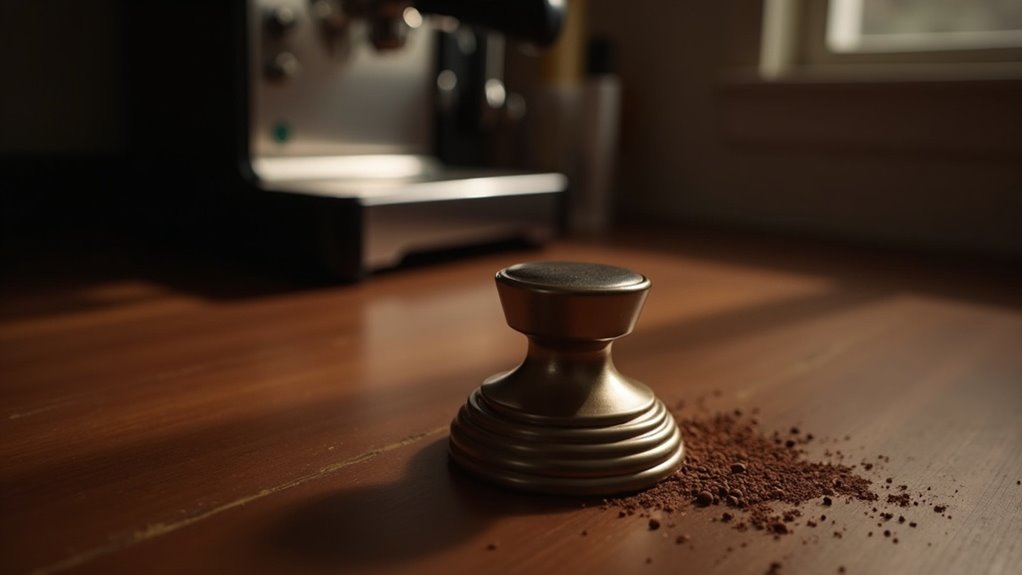
A grooved tamper base is a specialized espresso tool designed with indentations that create channels in coffee grounds. This design aims to enhance water flow during extraction, ultimately improving coffee quality. However, studies show that grooved tampers can lead to lower extraction yields compared to flat bases. Baristas often find that the inconsistency in tamping makes grooved designs less effective. For a deeper understanding of their impact on espresso quality, there’s much more to explore regarding their design and performance in the world of coffee.
Key Takeaways
- A grooved tamper base features indentations designed to create channels in coffee grounds, enhancing water flow during espresso extraction.
- While these tampers aim to improve the quality of coffee extraction, studies indicate they often result in lower extraction yields compared to flat bases.
- The channeling effects from grooved designs can lead to inconsistent espresso shots, making it more challenging for baristas to achieve tamping consistency.
- Users appreciate the aesthetic appeal and cleaner extraction appearances offered by grooved tampers, although they frequently observe lower extraction levels compared to their flat counterparts.
- Personal preferences play a significant role in tamper selection, with many individuals prioritizing design over performance, despite scientific evidence suggesting that flat tampers yield better results.
Understanding Grooved Tamper Design
Grooved tampers, with their uniquely designed bases featuring indentations, aim to enhance the brewing process by creating channels in the coffee grounds.
However, experimentation reveals that using grooved tampers often results in lower extraction yields compared to flat bases, with reductions around 2-2.12%.
Using grooved tampers can lead to lower extraction yields, with reductions between 2-2.12% compared to flat bases.
The surface structure of grooved tampers doesn’t show a significant performance difference against smooth surfaces, indicated by a P-value of 0.31.
While some coffee enthusiasts appreciate the aesthetic of grooved designs, this preference mightn’t translate to taste differences in espresso.
Effectiveness can also vary based on basket design, affecting water flow through the coffee bed, which is crucial for achieving the perfect brew.
The Purpose of Grooved Bases
While many coffee enthusiasts seek to improve their brewing process, the purpose of tamper bases with grooves is to create channels within the coffee bed, theoretically enhancing water flow during extraction.
However, studies indicate that using a grooved tamper may actually result in lower extraction yields, with decreases ranging from 2-2.12%.
The surface structure of these tampers shows no significant performance difference compared to smooth surfaces, evidenced by a P-value of 0.31.
Additionally, the effectiveness of grooved bases can vary based on basket design, affecting extraction dynamics and the potential for channeling, which is essential for ideal brewing.
Performance Comparisons With Flat Bases
When comparing performance in coffee preparation, flat tamper bases consistently outperform their grooved counterparts in espresso extraction.
Tests show flat tampers, like the decent tamper, yield the highest extraction efficiency, delivering consistent results. In contrast, grooved designs lead to a notable drop of 2-2.12% in extraction yield, primarily due to side channeling effects that compromise shot quality.
While some believe rippled bases enhance water flow, evidence indicates they actually decrease extraction yields.
Impact on Extraction Yield
When using a grooved tamper base, you might notice channeling effects that can negatively impact the yield of your espresso.
Research indicates that tampers with curved bases often lead to lower extraction yields, showcasing a significant performance difference when compared to flat bases.
Understanding how the surface structure of your tamper influences water flow is essential for achieving consistent results in your coffee preparation.
Channeling Effects on Yield
Channeling effects significantly influence extraction yield, especially when utilizing grooved tamper bases.
These designs create channels within the coffee puck, which can enhance water flow but frequently lead to reduced extraction yields.
Experimental data indicates that grooved tampers yield an average extraction that’s 2% to 2.12% lower than flat bases.
The disruption caused by channeling can result in inconsistent espresso shots and diminish overall quality.
While visually appealing, grooved tampers don’t effectively address channeling issues, ultimately compromising ideal extraction efficiency.
Understanding these effects is crucial for achieving the best coffee experience possible.
Surface Structure Comparison
Understanding the differences in surface structure among coffee tampers is essential for optimizing extraction yield. While you might think that rippled surfaces improve performance, studies show no significant benefits, with P-values indicating a lack of statistical significance. Conversely, curvature plays a critical role; curved tampers yield 2-2.12% less compared to flat bases. Here’s a comparison of surface structures for coffee tampers:
| Tamper Type | Extraction Yield Impact |
|---|---|
| Flat | Higher |
| Curved | Lower |
| Rippled | No significant change |
| Overall | Critical selection needed |
Choosing the right tamper design is crucial for achieving the best flavor in your brew.
Performance Consistency Challenges
While you might expect grooved tamper bases to enhance espresso performance, they often introduce significant challenges in achieving consistency, ultimately affecting extraction yield.
The inconsistent pressure distribution during tamping can lead to variations in extraction efficiency, resulting in espresso shots that may yield 2-2.12% less compared to flat bases.
The assumption that grooved bases improve water flow through the coffee bed lacks empirical support.
Instead, data shows that flat tampers, such as the decent tamper, consistently achieve higher extraction yields.
This highlights the crucial role of base shape in maintaining ideal espresso quality and ensuring performance consistency.
Considerations for Baristas
When using a grooved tamper base for your coffee, it’s important to consider the challenges of maintaining tamping consistency, as this can significantly affect extraction yield.
While the design may enhance the aesthetic of your coffee-making process, it’s crucial to assess whether it genuinely enhances functionality.
Be aware that channeling can occur, leading to inconsistent extraction results, which may not match your flavor preferences.
Tamping Consistency Challenges
Achieving consistent tamping can be particularly challenging for baristas, especially when using grooved tamper bases. The grooves disrupt uniform tamp pressure, which can make leveling the tamp accurately across the coffee bed more difficult.
This inconsistency can lead to uneven extraction, as varying surface areas influence how water interacts with the coffee grounds. Additionally, different basket designs may exacerbate these issues, affecting how the coffee grounds settle and compact.
Even slight variations in your tamping technique can significantly impact the quality of your espresso. Therefore, mastering a consistent tamping method is essential, regardless of the type of tamper you choose to use.
Impact on Extraction Yield
The choice of tamper base is crucial as it directly impacts extraction yield, an essential consideration for baristas striving for the ideal espresso quality. Grooved tampers can create channels for water flow, which may hinder extraction efficiency and result in lower yields—typically by 2% to 2.12%. On the other hand, flat tampers, particularly self-leveling designs, enhance consistency and lead to superior extraction outcomes.
| Tamper Base Type | Impact on Extraction Yield |
|---|---|
| Grooved Tamper | Lower (2% to 2.12% drop) |
| Flat Tamper | Higher consistency |
| Self-Leveling Flat | Optimal extraction |
| Grooved vs. Flat | No significant taste difference |
Design Aesthetic vs. Functionality
While a grooved tamper might catch your eye with its unique design, it’s crucial to consider how aesthetics compare to functionality in the world of coffee.
The design appeal of grooved tampers can be alluring, but empirical data indicates that they may hinder extraction efficiency, leading to a yield drop of 2-2.12% compared to flat bases.
Despite their striking visual presence, the flavor and extraction quality often fall short of expectations.
For baristas who prioritize consistent performance in espresso preparation, flat tamper bases generally provide superior functionality, ensuring better espresso extraction.
Therefore, finding the right balance between design aesthetic and practicality is essential when selecting a tamper to achieve the best coffee results.
Community Insights and Experiences
As you dive into the world of grooved tamper bases, you’ll uncover a variety of insights and experiences shared by fellow coffee enthusiasts.
Many users note that while grooved tampers may create cleaner extraction appearances, they often produce lower extraction levels compared to flat tampers.
Some espresso aficionados have tried grooved bases but found no significant differences in taste or texture.
The relationship between basket design and grooved tampers adds another layer of complexity to their effectiveness.
Ultimately, personal preferences for feel and aesthetics tend to take precedence over any perceived scientific advantages, leading many to reconsider the practicality of grooved designs for their daily coffee rituals.