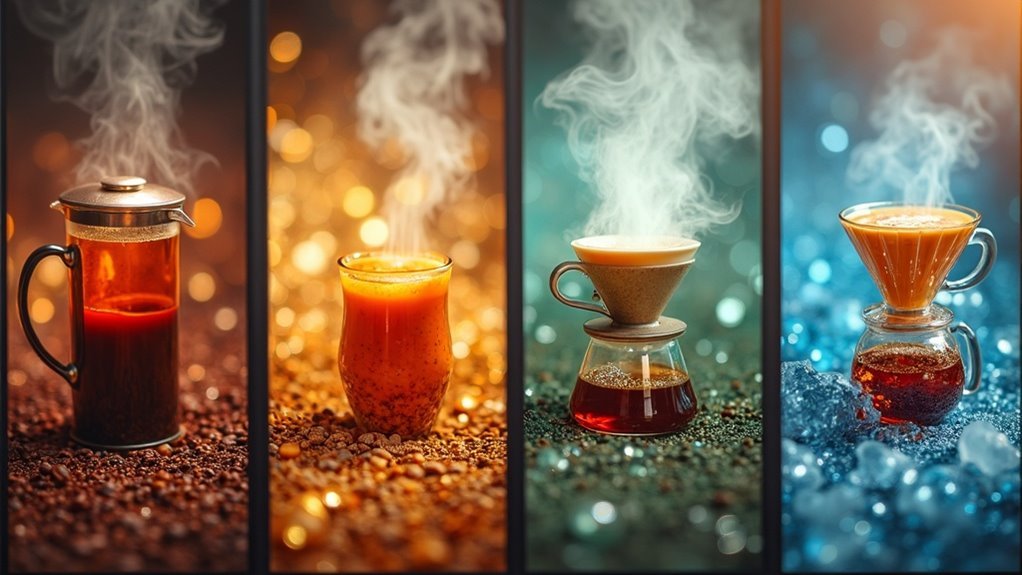
To elevate your coffee game, consider using comparison charts that showcase different brewing methods, emphasizing key factors such as time commitment, flavor profiles, and costs.
Focus on the best comparisons between immersion and pour-over techniques, along with the essential equipment needed for each method.
These insights will guide you in selecting a brewing style that aligns with your skill level and taste preferences.
Stay tuned, and you’ll uncover even more ways to enhance your coffee experience.
For The Love of Hops: The Practical Guide to Aroma, Bitterness and the Culture of Hops

If you’re a mid to upper-level home brewer or a coffee enthusiast eager to dive deeper into the world of coffee, *For The Love of Coffee: The Practical Guide to Aroma, Flavor, and the Culture of Coffee* is your go-to resource. This book offers a thorough exploration of coffee, blending historical insights with technical details. You’ll discover cultivation methods, essential flavors, and the chemistry behind acidity and body. Recipes illustrate how various coffee styles utilize different brewing techniques, enriching your brewing experience. With interviews and engaging narratives, Hieronymus enhances your appreciation for coffee and its vital role in crafting exceptional brews.
Best For: Mid to upper-level home brewers and coffee enthusiasts seeking to deepen their understanding of coffee.
Pros:
- Comprehensive exploration of coffee, including history, cultivation, and essential flavors.
- Engaging writing style with interviews that enhance appreciation of coffee in brewing.
- Valuable technical insights into coffee’s chemistry and brewing applications.
Cons:
- May be dense for casual readers or beginners in home brewing.
- Not a traditional recipe book, which could disappoint those looking solely for brewing recipes.
- Requires a certain level of prior knowledge to fully grasp the technical aspects discussed.
CO2 / Nitrogen Pressurized Gas Racking Tool for Fermenter
Product not found or API error.
The CO2 / Nitrogen Pressurized Gas Racking Tool is perfect for coffee enthusiasts looking to enhance their brewing process. Designed for Speidel plastic fermenters and storage tanks, this 29-inch tool allows you to transfer coffee liquids effortlessly using compressed gas. Its adjustable racking cane fits various tank sizes, and the high-temperature o-ring ensures no leaks during transfer. Weighing just one pound, it’s easy to handle. With a CO2 ball lock connector, you can quickly connect or disconnect your gas supply. This durable 304 stainless steel tool not only improves efficiency but also elevates your coffee brewing experience. Get ready to enjoy smoother transfers!
Best For: Coffee brewers seeking an efficient and reliable way to transfer liquids in Speidel plastic fermenters and storage tanks.
Pros:
- Adjustable racking cane accommodates various tank sizes for versatile use.
- High-temperature o-ring ensures leak-free operation, enhancing reliability during transfers.
- Lightweight design and durable 304 stainless steel construction make it easy to handle and long-lasting.
Cons:
- Requires a compatible CO2 Ball Lock connector, which is not included in the package.
- Limited to use with Speidel fermenters and tanks, reducing versatility with other brands.
- Best Sellers Rank indicates it might not be the most popular choice among coffee brewing tools.
Coldbreak Jockey Box Dispensing Kit

For those looking to elevate their coffee dispensing experience, the Coldbreak Coffee Dispensing Kit is a game-changer. This complete 3-tap solution is perfect for coffee kegs, making it ideal for cafes, parties, and events. It features a premium CO2 regulator with dual gauges, ensuring precise pressure control for nitro coffee. The durable stainless steel connections guarantee leak-free fittings, while the included beverage jumper and air line make setup a breeze. Designed specifically for Coldbreak coffee systems, you can count on it for consistent, invigorating brews every time. With a customer rating of 5.0 stars, it’s a reliable choice for any gathering.
Best For: The Coldbreak Coffee Dispensing Kit is best for cafes, event organizers, and home brewers looking to serve cold brew coffee efficiently at parties and gatherings.
Pros:
- High-quality construction with stainless steel connections ensures durability and leak-free performance.
- Easy setup with included beverage jumper and air line, making it user-friendly for any occasion.
- Precise pressure control with a premium CO2 regulator and dual gauges for optimal coffee dispensing.
Cons:
- Limited to Coldbreak coffee systems, which may restrict compatibility with other brewing setups.
- Weight of 12 pounds can make it less portable for some users.
- Specific use case may not appeal to those who do not frequently host events or use coffee kegs.
Candlestick Pattern Cheat Sheet for Trading

Mastering the art of brewing coffee requires a solid understanding of flavor profiles, and the Coffee Brewing Techniques Cheat Sheet is an essential tool for coffee enthusiasts of all levels. This durable 3-page cardstock resource features over 190 brewing methods and tips, helping you make informed decisions on your coffee preparation. With clear visual designs, you’ll quickly recognize brewing styles, flavor extractions, and equipment usage across various coffee types. Lightweight and waterproof, it’s perfect for coffee lovers on the go. With an average rating of 4.2 stars, users appreciate its quality, though some seek more detailed explanations of brewing techniques. Don’t miss out on this valuable coffee brewing aid!
Best For: Coffee enthusiasts of all levels seeking to enhance their brewing skills using a comprehensive library of coffee techniques.
Pros:
- Massive library of over 190 methods for effective coffee brewing.
- Clear visual design for quick recognition of brewing techniques and flavor profiles.
- Waterproof and lightweight, making it convenient for coffee lovers on the go.
Cons:
- Some users report a lack of detailed explanations for the brewing methods.
- Feedback indicates that while quality is good, additional context would be beneficial.
- Limited to visual aids without textual descriptions for in-depth learning.
Factors to Consider When Choosing Brewing Method Comparison Charts
When selecting brewing method comparison charts for coffee, you’ll want to consider several key factors. Evaluate the various brewing methods available, the equipment required for each, and the time commitment involved in the brewing process. Additionally, be sure to take into account the flavor profiles that different methods produce, as well as the costs associated with each method, since these elements will significantly influence your overall coffee experience.
Brewing Method Types
Choosing the right brewing method can significantly impact your coffee’s flavor and aroma. You’ve got traditional methods like drip brewing, which involves water passing through coffee grounds, and French press, where coarsely ground coffee steeps in hot water for a rich taste. If you want a middle ground, consider pour-over brewing; it offers more control over extraction without overwhelming you as a beginner. Advanced methods like cold brew and siphon brewing are gaining popularity, providing unique flavors that stand out. Your choice often depends on your experience level, the coffee style you prefer, the equipment you have, and how much time you can dedicate. Understanding each method’s strengths and weaknesses is crucial for brewing the perfect cup.
Equipment Requirements
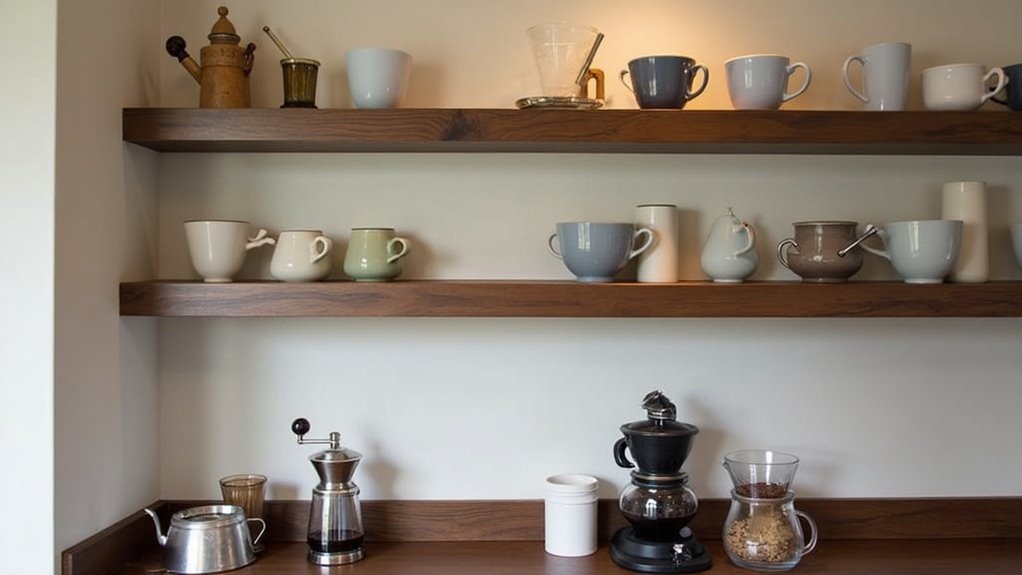
Understanding the equipment requirements for different coffee brewing methods is essential for achieving the best results. When comparing brewing techniques, consider the specific gear you’ll need, such as coffee makers, grinders, or pour-over setups, which can vary significantly between methods like French press and espresso. You’ll also want to evaluate if you need extra tools, such as scales for measuring coffee or temperature-controlled kettles, as these can greatly influence your brew’s flavor and quality. Don’t forget to assess the space required for your setup, including the size of the equipment and how it fits into your kitchen workflow. Maintenance is important too; some methods require more extensive cleaning and specialized tools. Finally, consider the costs involved, as initial investments can vary widely, impacting your coffee brewing experience.
Time Commitment
After you’ve set up your equipment for brewing coffee, the next vital factor to contemplate is the time commitment involved. Brewing methods can vary greatly in the time they require. For example, pour-over brewing can take about 3 to 5 minutes, while French press typically takes around 4 minutes of steeping time. The active brewing process—boiling water, steeping grounds, and pressing—generally lasts between 5 to 10 minutes, depending on your chosen method. Additionally, don’t forget about any necessary preparation time, such as grinding your coffee beans, which can take a few additional minutes. Managing your time effectively through each stage is essential to guarantee your coffee is ready when you want it.
Flavor Profiles
Flavor profiles play an essential role in your coffee experience, as the brewing method you select can markedly alter the taste. Different techniques, such as immersion or pour-over, extract flavors uniquely, impacting your coffee’s sweetness, acidity, and body. The water temperature you choose also matters; brewing at higher temperatures often enhances fruity or spicy notes, while cooler methods might bring out more delicate flavors. Additionally, the grind size and coffee bean origin will influence the final profile, with various beans offering distinct characteristics. Don’t forget about water quality—its mineral content and pH can greatly affect how flavors are perceived. By considering these elements, you can elevate your coffee game and discover your ideal brew.
Cost Considerations
When you’re choosing a coffee brewing method, cost evaluations can greatly impact your decision. First, consider the initial setup costs—some methods require expensive equipment like espresso machines or high-quality grinders. Don’t forget to assess ongoing operating costs, including energy for brewing, as well as ingredients like coffee beans, which can vary widely in price. Specialty equipment or unique flavor additives can further drive up your expenses. Maintenance costs also matter; some methods might require frequent cleaning or part replacements that add to your budget. Finally, evaluate the potential yield and market price for your finished product, as higher yields may help offset those initial investments over time, making a method more financially viable.
Skill Level
Choosing the right brewing method for coffee can feel overwhelming, especially if you’re unsure about your skill level. Understanding where you stand is essential in making the best choice. If you’re a beginner, simple methods like pour-over or French press might be your best bet, allowing you to grasp the basics without needing extensive equipment. As you gain confidence, you can explore methods like espresso brewing or Aeropress, which offer more control but require a bit more technique. For advanced coffee enthusiasts, techniques like cold brew or siphon brewing demand a high skill level and experience with precision and timing. Evaluating your current experience and your willingness to learn can make a significant difference in your coffee brewing journey, enhancing both success and enjoyment.
Batch Size
Batch size plays an essential role in determining the best brewing method for your coffee. When brewing at home, you might use smaller batch sizes, ranging from 1 to 5 gallons, which allows for more experimentation and flexibility with your coffee recipes. On the other hand, larger commercial batches can exceed 310 gallons, requiring stricter quality control to maintain consistency in flavor and aroma. Choosing a batch size also influences ingredient scaling; larger batches often mean bulk purchasing of coffee beans, which can lower per-unit costs. Additionally, fermentation time and sanitation measures become crucial considerations, as larger volumes require more robust sanitation to prevent contamination. Ultimately, your choice of batch size will shape both your brewing experience and the quality of your final cup of coffee.