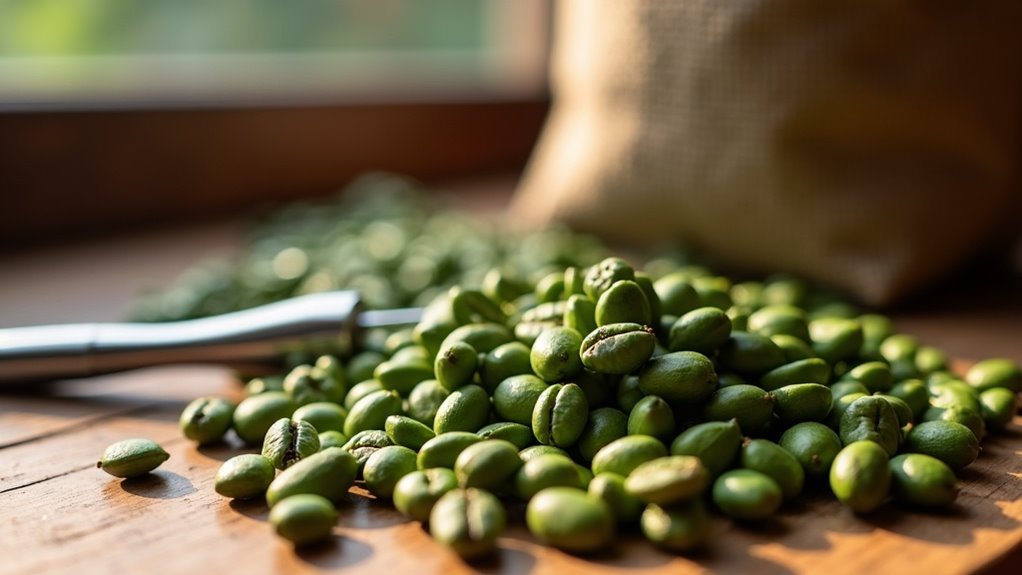
To achieve quality brews, focus on these top four green coffee grading standards: bean size uniformity, moisture content, defect assessment, and aroma and flavor profile.
A consistent bean size guarantees even roasting, while maintaining moisture between 10% and 12% is essential for preservation.
Identifying defects helps you secure quality beans, and the coffee’s aroma and flavor reveal much about its origin and processing.
Stick around, and you’ll uncover more insights to elevate your coffee experience.
Official ANA Grading Standards for United States Coins

If you’re a coffee enthusiast or barista looking to enhance your brewing skills, the Official Coffee Brewing Standards is your essential guide. In its latest edition, this book focuses on brewing techniques and coffee types, providing detailed coverage of various brewing methods while briefly touching on specialty coffees. The spiral-bound design allows you to lay it flat for easy reference. You’ll appreciate the extensive visual aids, with photographs and diagrams clarifying key features for brewing the perfect cup. While it lacks coverage for brewing innovations introduced after 2020, it remains highly recommended for accurate brewing techniques and understanding of your coffee preferences.
Best For: Coffee lovers and professionals aged 15 and up, especially those interested in classic brewing methods.
Pros:
- Detailed visual aids with photographs and diagrams enhance brewing accuracy.
- Spiral-bound design allows for easy reference during brewing sessions.
- Highly recommended for those looking to improve their understanding of coffee brewing.
Cons:
- Lacks coverage for brewing innovations from 2020 or later, limiting its relevance for modern coffee enthusiasts.
- Some copies may arrive with damage, such as stains, despite good packaging.
- Readers express a desire for an updated volume to include recent coffee trends and techniques.
7 PCS Espresso Accessories Kit for 54mm Portafilters

The 7 PCS Espresso Accessories Kit for 54mm portafilters is an essential collection for both novice and seasoned coffee enthusiasts aiming to elevate their espresso-making experience. This comprehensive kit includes a spring-loaded tamper, adjustable distributor, dosing funnel, and more, all meticulously crafted to enhance your espresso brewing journey. Achieve consistent tamping with a pressure of 30 lbs and enjoy even grounds distribution for optimal extraction. The durable stainless steel components ensure long-lasting use, while the ergonomic designs prioritize comfort during brewing. Users have reported notable improvements in flavor and consistency, making this kit a must-have addition to your coffee tools. It also makes for a thoughtful gift for anyone passionate about coffee who aspires to create café-quality brews at home.
Best For: This kit is ideal for home baristas and coffee aficionados seeking to refine their espresso brewing techniques and achieve results comparable to a café.
Pros:
- High-quality stainless steel components guarantee durability and longevity.
- Ergonomic designs enhance comfort and control during use.
- Users have noted significant improvements in flavor and consistency in their espresso preparation.
Cons:
- Certain accessories, such as the WDT tool and dosing funnel, have received mixed feedback regarding their effectiveness.
- Compatibility may vary, so users should check fit with their specific portafilter sizes.
- Some may find the kit to be on the pricier side for casual coffee drinkers.
58mm Rocket Accessories Kit for Espresso Tools
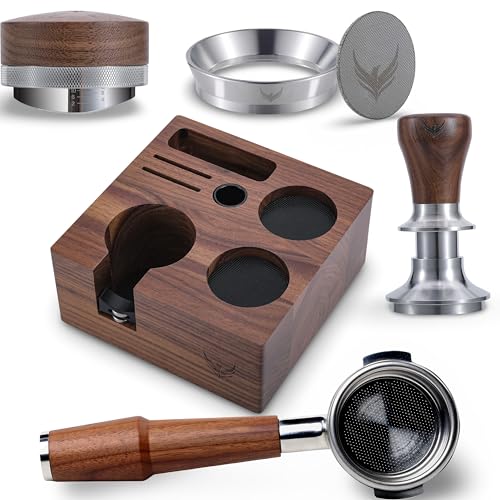
Crafted specifically for E61 group head espresso machines, the 58mm Rocket Accessories Kit is ideal for home baristas eager to enhance their coffee brewing skills. This comprehensive kit includes a bottomless portafilter with a walnut handle, a calibrated tamper, and an adjustable distributor, all designed for precision. The walnut tamping station, equipped with storage slots, and the magnetic dosing funnel ensure a clean and efficient brewing experience. Each tool is tailored to improve your workflow, providing accuracy and control for consistently excellent coffee shots. Whether you have a Rocket Appartamento or another compatible machine, this kit is your key to mastering espresso at home.
Best For: Home baristas aiming to refine their coffee-making techniques and achieve consistent results with E61 group head machines.
Pros:
- Precision Tools: Each component is crafted for accuracy, guaranteeing perfectly extracted coffee shots every time.
- Durable Design: Constructed from high-quality materials for long-lasting performance and easy maintenance.
- Complete Kit: Includes all necessary tools to enhance workflow and coffee quality, offering great value.
Cons:
- Price Point: May be seen as pricey for beginners or casual coffee enthusiasts.
- Compatibility: Specifically designed for 58mm setups, limiting use with other machine types.
- Learning Curve: Users may require time to master the use of each tool for the best results.
Bacha Coffee Lagoa and Yirgacheffe Specialty Coffee Gift Box Bundle

Looking for a unique gift for the coffee lover in your life? The Bacha Coffee Lagoa and Yirgacheffe Specialty Coffee Gift Box Bundle is an exceptional choice. This exquisite collection features 100% Arabica beans sourced from around the globe, elegantly packaged in a beautifully illustrated gift box. Each single-serve drip coffee bag is hermetically sealed to preserve its rich and complex flavors, including delightful notes of cracked cocoa and intriguing floral hints. With simple preparation—just add hot water—you can savor high-quality coffee anywhere you go. Treat your loved ones to this luxurious experience that promises a captivating sensory journey with every sip.
Best For: Coffee enthusiasts seeking a luxurious and convenient gift that delivers a global coffee experience.
Pros:
- Exquisite flavor profile with rich notes of cracked cocoa and floral undertones.
- Convenient single-serve bags facilitate easy preparation and portability.
- Beautifully illustrated gift box enhances the overall gifting experience.
Cons:
- Limited to single-serve portions, which may not satisfy those who prefer larger brewed quantities.
- Higher price point compared to standard coffee options.
- Requires hot water for preparation, which may not be readily available in all situations.
Factors to Consider When Choosing Green Coffee Grading Standards
When selecting green coffee grading standards, it’s important to assess various key factors. Bean size uniformity, moisture content measurement, and defect count assessment are all crucial in determining the quality of the coffee. Additionally, aspects such as aroma, flavor profile, altitude, and origin significantly influence the overall coffee experience.
Bean Size Uniformity
One key factor to evaluate in green coffee grading standards is bean size uniformity, which plays an essential role in ensuring an even roast and a balanced flavor profile. Uniform beans roast more consistently, leading to a more enjoyable cup of coffee. Typically, green coffee beans are graded based on size, with larger beans often deemed higher quality due to their denser structure and flavor potential. The Specialty Coffee Association of America (SCAA) employs a grading system that includes size classifications, such as “screen size.” If your beans lack uniformity, you’ll experience inconsistent extraction during brewing, resulting in a less desirable coffee with varying flavor notes. Remember, for specialty designation, grading standards typically require a specific percentage of beans to fall within a certain size range.
Moisture Content Measurement
After ensuring bean size uniformity, the next important factor to consider is moisture content measurement in green coffee grading standards. Ideal moisture levels, typically between 10% and 12%, are crucial for maintaining the quality and stability of your coffee during storage. Excess moisture can lead to mold growth and spoilage, while insufficient moisture can diminish the flavor and aroma in your final brew. You can measure moisture content using moisture meters for quick assessments or the more precise but time-consuming oven-drying method. It’s important to note that moisture affects the weight and density of your beans, which in turn impacts pricing and marketability. Regular monitoring of moisture levels during storage is essential, as fluctuations in environmental conditions can alter moisture content and compromise the quality of your coffee.
Defect Count Assessment
Understanding defect count assessment is essential for establishing green coffee grading standards, as it directly influences the perceived quality and marketability of your coffee. This process involves identifying and quantifying imperfections like broken, chipped, or discolored beans, which can greatly affect flavor. The Specialty Coffee Association defines defect categories, with a maximum of five defects per 300 grams accepted for specialty-grade coffee. Primary defects, such as insect damage and mold, are penalized more heavily than secondary defects like uneven size. To achieve accurate assessments, trained cuppers or graders must follow standardized protocols through visual inspections and sorting. A high defect count can lower your coffee’s grade, impacting its marketability and how consumers perceive its quality.
This website is dedicated to coffee enthusiasts, providing insights into grading standards and the importance of defect count assessment in enhancing your coffee experience.
Aroma and Flavor Profile
While defect count assessment plays an essential role in grading green coffee, the aroma and flavor profile is equally important for determining quality. The origin, processing method, and altitude at which the coffee is grown greatly affect its final taste. Specialty coffee grading standards often focus on the complexity and balance of flavors, evaluating notes like sweetness, acidity, body, and aftertaste during cupping. Consistent flavor profiles indicate high-quality green coffee, with desirable characteristics such as floral, fruity, or nutty notes varying by variety and region. Defects like sourness or off-flavors can detract from quality, making aroma and flavor assessment vital. Professional cuppers use scoring systems, with a score of 80 or above marking specialty grade coffee, ensuring that coffee lovers can find exceptional brews that meet their standards.
Altitude and Origin Factors
When selecting green coffee grading standards, altitude and origin are crucial factors that significantly impact flavor and quality. Coffee cultivated at elevations above 1,200 meters often develops intricate flavors and acidity due to the cooler temperatures that slow down cherry maturation. The origin of the coffee also plays a vital role; various regions provide unique soil compositions and climate conditions, which contribute to distinct flavor profiles. For example, certain regions are renowned for their fruity, floral, or nutty notes. Furthermore, beans grown at higher altitudes tend to be denser, typically indicating superior quality. By understanding these elements, you can more effectively classify beans into quality levels and make informed purchasing choices, ultimately elevating your coffee experience.
Processing Method Impact
The processing method you choose for green coffee beans plays a pivotal role in shaping the final flavor profile, acidity, and body of your brew. Methods like washed, natural, or honey each produce distinct characteristics. Washed coffee tends to yield a cleaner, brighter cup, while natural processed beans often deliver fruity, complex flavors. Additionally, different processing techniques can affect moisture content and defect levels, impacting grading quality. You’ll find that some methods lead to more consistent results, making grading easier. When considering grading standards in the coffee industry, remember that the processing method can influence both market value and desirability. By understanding these impacts, you can make informed choices that enhance the quality of your coffee.
Grading Scales Comparison
How do you choose the right grading scale for green coffee? First, consider the scale’s range; a 1 to 10 scale offers a straightforward quality assessment, while the Specialty Coffee Association’s 100-point scale provides a more nuanced evaluation, where scores above 80 indicate specialty grade. You might also look into the Coffee Quality Institute’s approach, which includes both sensory and physical evaluations to reflect overall quality. Defect analysis is vital, as it categorizes defects per 300 grams, significantly impacting market value. Keep in mind that grading standards can vary by region and organization, affecting how coffee is assessed and valued. Selecting the right scale ensures you receive the best quality for your brews and investment.