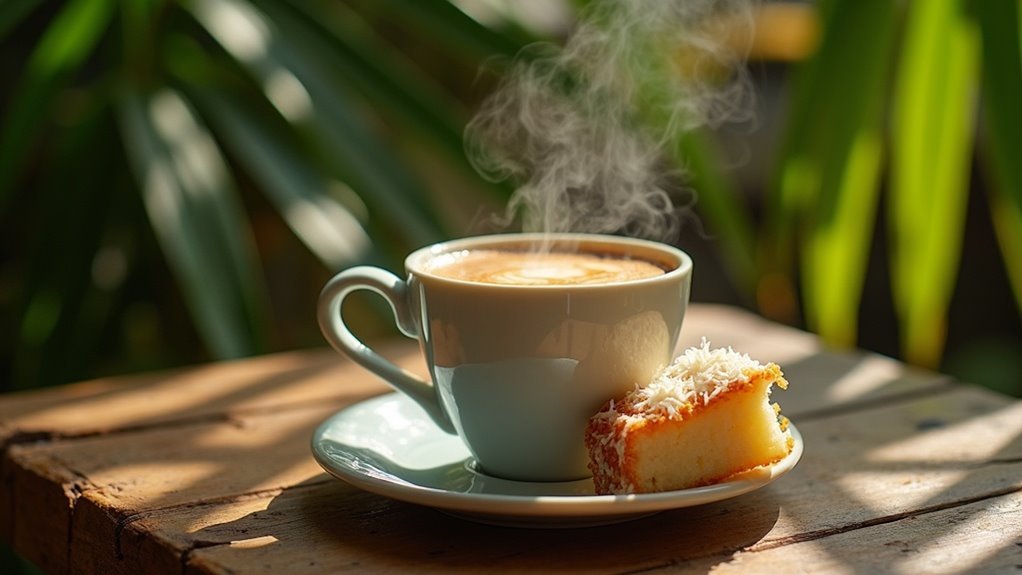
Hainanese coffee is a unique blend of rich flavors and vibrant culture from Hainan Island. Originating from Hainanese merchants in the 1890s, this coffee primarily features robust Robusta beans, known for their higher caffeine content. The traditional roasting methods caramelize the coffee, resulting in a bold and distinctive taste. Brewed using techniques like the cloth filter method, Hainanese coffee is typically served with milk or sugar, fostering a strong sense of community around this beloved beverage. Additionally, there’s much to discover about its cultural significance and potential health benefits, making it an intriguing subject for coffee enthusiasts.
Key Takeaways
Hainanese coffee has a rich history that dates back to the 1890s when Hainanese merchants introduced Robusta coffee beans to the island, taking advantage of its ideal growing conditions. These medium-sized Robusta beans are celebrated for their bold flavor and higher caffeine content, setting them apart from the more commonly known Arabica coffee.
The traditional roasting methods used in Hainan involve caramelizing the coffee beans with sugar and grains, resulting in a unique, rich, and dark flavor profile that coffee enthusiasts appreciate. Hainanese coffee is not just a beverage; it holds significant cultural importance, with a lively coffee culture evident in over 200 local establishments and various festivals that celebrate its heritage.
Moreover, the economic impact of coffee cultivation in Hainan is noteworthy, with an estimated value of $18,510 per hectare. This contributes significantly to the local agriculture sector and boosts exports, making Hainanese coffee an integral part of the island’s economy.
The Origins of Hainanese Coffee
When you explore the origins of Hainanese coffee, you’ll uncover a fascinating history that traces back to the 1890s.
This narrative begins with overseas Hainanese merchants who brought Robusta coffee beans from Malaysia, initiating the cultivation of coffee on the island. The first plantation established outside Yunnan thrived in Hainan’s distinctive climate, laying the foundation for a vibrant coffee culture.
Over time, local brewing techniques developed, enriching the coffee’s flavor with ingredients like sugar, butter, and sesame. Innovations such as the Dafeng-1 coffee breed have further revolutionized Hainan’s coffee industry, boosting yields and reinforcing the region’s significance in the expanding global coffee market.
Unique Characteristics of Hainan Coffee Beans
As you delve into the unique characteristics of Hainan coffee beans, you’ll quickly discover the distinct qualities that make them stand out.
Hainan primarily cultivates Robusta coffee beans, which are recognized for their medium size and higher caffeine content, making them perfect for brewing coffee with a bold flavor profile.
These beans thrive in Hainan’s volcanic soil and tropical climate, allowing them to flourish even at lower altitudes. The Dafeng-1 breed exemplifies agricultural innovation with impressive yields.
With Robusta beans constituting approximately 45% of global coffee production, Hainan is well-positioned to meet the growing demand for strong, high-caffeine coffee options, significantly enhancing the region’s coffee reputation.
Traditional Roasting Techniques
Building on the unique characteristics of Hainan coffee beans, traditional roasting techniques play a pivotal role in shaping their distinctive flavor. These methods enhance the aromatic coffee experience through careful blending of ingredients.
Here are some key aspects to contemplate:
- Sugar and grains are mixed with beans, creating a caramelized flavor that adds depth to the taste.
- The roasting process lasts about five minutes, with rapid stirring to maintain texture and even roasting.
- Freshly roasted coffee is brewed immediately, aligning with Hainan’s vibrant coffee culture and ensuring optimal freshness.
These traditional roasting methods guarantee a darker, richer cup, allowing for customization while maintaining quality and consistency, making every sip a testament to the art of coffee roasting.
Brewing Methods for Hainanese Coffee
When you brew Hainanese coffee, you’re embracing a rich tradition that combines unique techniques and special equipment.
Each method offers a distinct flavor profile, allowing you to customize every cup to your preference—whether you enjoy it thick and sweet or light and smooth.
Let’s explore the essential brewing methods that make the Hainanese coffee experience truly special.
Traditional Brewing Techniques
Hainanese coffee is renowned for its distinctive brewing techniques that accentuate rich flavors and allow for personalization.
Rooted in a cultural history of traditional coffee, this brewing process employs a cloth filter, or “sock,” to ensure a smooth and enjoyable beverage.
Here’s how you can replicate this method:
- Begin by adding coffee powder to a steel pot filled with hot water, stirring the mixture for about a minute.
- Next, strain the mixture through the cloth filter into a separate pot to achieve a clear liquid.
- You can then customize your drink by choosing options like “kopi” (with milk) or “kopi O” (with sugar).
To enhance the experience, rinse your cups with hot water before serving to maintain warmth.
Additionally, pouring the coffee from a height creates a delightful frothy finish, enriching the overall enjoyment of your cup.
Equipment and Utensils
To brew the perfect cup of Hainanese coffee, you’ll need a few key pieces of equipment that enhance the overall coffee experience. Essential items include steel pots for brewing, cloth filters to sieve out the coffee grounds, and warming plates to keep your coffee hot. A simple rinse of your cups with hot water before serving enhances the warmth and flavor. Pouring from a height adds a frothy finish, known as “kopi tarek.” Here’s a quick overview of the essential equipment:
| Equipment | Purpose |
|---|---|
| Steel Pots | Brew coffee |
| Cloth Filters | Strain grounds |
| Warming Plates | Maintain temperature |
| Rinsed Cups | Enhance flavor |
Variations in Serving
While exploring the rich world of coffee, you’ll discover that Hainanese coffee offers a delightful array of serving variations that cater to diverse palates.
The traditional brewing method includes sugar and can be customized with milk or served undiluted.
You might enjoy:
- Traditional Kopi: A standard brew with a balanced flavor, perfect for any coffee lover.
- Kopi Kao: A richer, thicker version for those who prefer a bolder taste, ideal for those seeking a more intense coffee experience.
- Frothy Finish: Served hot, often poured from a height for an enticing froth that adds an extra layer of enjoyment.
Each cup reflects a unique combination of flavors, enhancing your coffee experience.
Enjoy experimenting with different variations to find your perfect brew!
Cultural Significance and Consumption
As you sip on a cup of gebi, you’re not just enjoying a beverage; you’re immersing yourself in the rich cultural tapestry that defines Hainan. This local coffee, often enjoyed black or sweetened, embodies the island’s history and the communal spirit found in its bustling coffee shops. With over 200 establishments in Xinglong alone, coffee is a daily staple for residents, weaving a sense of community among them. The Fushan Coffee Cultural Village and Qionghai’s Old Southeast Asia Café exemplify the importance of kopi in fostering connections and shared experiences.
| Location | Cultural Highlight | Coffee Experience |
|---|---|---|
| Fushan Coffee Cultural Village | Deep-rooted coffee traditions | Explore various brewing methods and flavors |
| Qionghai’s Old Southeast Asia Café | Meeting point for locals | Savor unique Southeast Asian coffee offerings |
| Xinglong | Over 200 local coffee shops | Essential part of daily life for the community |
| Hainan | Integration of history | Reflects local customs, values, and social interactions |
Health Benefits and Nutritional Aspects
When you sip on Hainanese coffee, you’re indulging in a robust caffeine kick that can energize your day.
However, be mindful of the sugar content, as a typical serving might push you beyond the recommended daily limit.
On the bright side, this unique brew also packs antioxidants that may support liver health and reduce disease risk, making it a fascinating choice for coffee enthusiasts.
Caffeine Content Comparison
Have you ever wondered how Hainanese coffee compares to other varieties in terms of caffeine content?
This distinct brew, primarily made from Robusta beans, delivers a robust caffeine kick with approximately 2.2 to 2.7% caffeine content.
This is significantly higher than the 1.2 to 1.5% found in Arabica coffee.
Here’s what this means for coffee enthusiasts:
- Enhanced alertness and energy levels
- Improved mental focus and physical performance
- A recommended daily limit of about 300 mg (equivalent to 3-4 cups)
Savor Hainanese coffee for its stimulating effects, but remember to enjoy it in moderation to prevent potential side effects.
Sugar and Health Risks
How does the sweetness of Hainanese coffee impact your health?
With sugar added, each cup can contain up to three teaspoons, easily exceeding the World Health Organization’s recommended intake of five teaspoons daily. This excess can lead to serious health risks, such as obesity, type 2 diabetes, and cardiovascular diseases.
While Hainanese coffee offers the benefits of caffeine for alertness and metabolism, moderation is key.
As awareness grows about sugar’s dangers, initiatives in Singapore encourage a healthier approach to enjoying coffee. By savoring Hainanese coffee mindfully, you can appreciate its unique flavor without compromising your well-being.
Antioxidant Properties Explained
While sipping on a warm cup of Hainanese coffee, you’re not just indulging in a delightful beverage; you’re also reaping the benefits of its remarkable antioxidant properties.
Sourced from robust coffee plantations, this brew offers an array of health advantages:
- Contains chlorogenic acids that help reduce inflammation
- May lower the risk of diseases such as type 2 diabetes and liver disease
- Retains its health benefits even when enjoyed with sugar and butter in moderation
The unique roasting process further enhances its antioxidant capacity.
Economic Impact and Market Trends
As Hainan embraces its role as a burgeoning coffee hub, the economic impact and market trends surrounding Hainanese coffee are becoming increasingly significant.
The rise in coffee production, particularly with the Dafeng-1 breed, showcases impressive yields that boost local agriculture. With Robusta coffee gaining popularity due to its resilience and caffeine content, Hainan’s market presence is set to grow.
The region’s strategic plans to export this coffee through RCEP promise to enhance its international footprint. Overall, the economic value of Hainan’s coffee cultivation, estimated at $18,510 per hectare, highlights its potential as a thriving agricultural sector, making it an exciting topic for coffee enthusiasts and industry professionals alike.
Events and Competitions Celebrating Hainanese Coffee
Hainan’s vibrant coffee culture comes alive through a variety of events and competitions that celebrate its rich heritage and innovative spirit. Engaging activities showcase the skills of local coffee roasters and the art of brewing, attracting both residents and tourists alike.
Key highlights include:
- The Fushan Cup International Barista Championship, which promotes Hainanese coffee on a global scale.
- Qionghai’s Old Southeast Asia Café, reflecting local traditions and hosting historical coffee events.
- Local coffee festivals that emphasize cultivation, processing, and community consumption.
These events create a lively atmosphere, forging connections between Hainanese heritage and contemporary coffee trends, making it a must-visit destination for coffee enthusiasts.